Noise maps
Interactive block-level noise heatmaps for every city in the 311info catalog with sufficient geocoded 311 noise-complaint data. Tap any block or search any address to get an A–F noise grade and a raw “complaints per week within a block” count, all computed directly from each city’s open data portal.
Current release
Data through April 2026
Refreshed with each gold-layer build · 6 cities records
How these maps are built
For each eligible city, every geocoded 311 noise complaint from the trailing 12 months is placed at its reported lat/lng and weighted by complaint type (construction and amplified music count more) and time of day (complaints filed 10pm to 7am count 2×, reflecting the disproportionate health impact of night noise). The city is tiled into a 200m grid and each cell’s density is computed via Gaussian KDE (σ = 200m). Grades are per-city percentiles: A = quietest 10%, F = loudest 10%, with B/C/D splitting the middle 80%.
Cities with a noise map
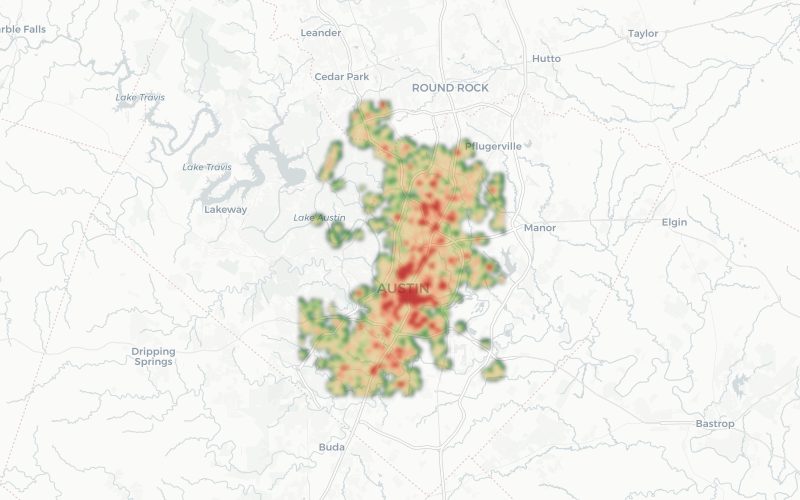
Austin
TX14.8K geocoded noise complaints · 11.9K grid cells
A 1.2K · B 2.4K · C 4.8K · D 2.4K · F 1.2K
Open Austin noise map →
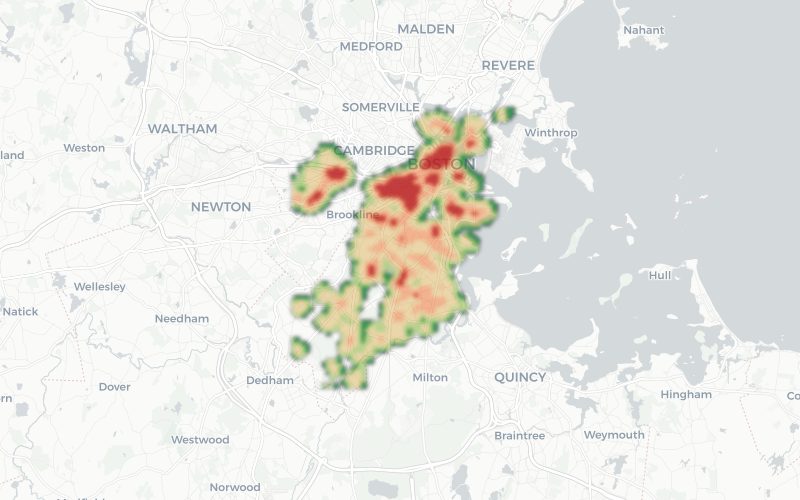
Boston
MA1.4K geocoded noise complaints · 2.3K grid cells
A 227 · B 453 · C 905 · D 453 · F 227
Open Boston noise map →
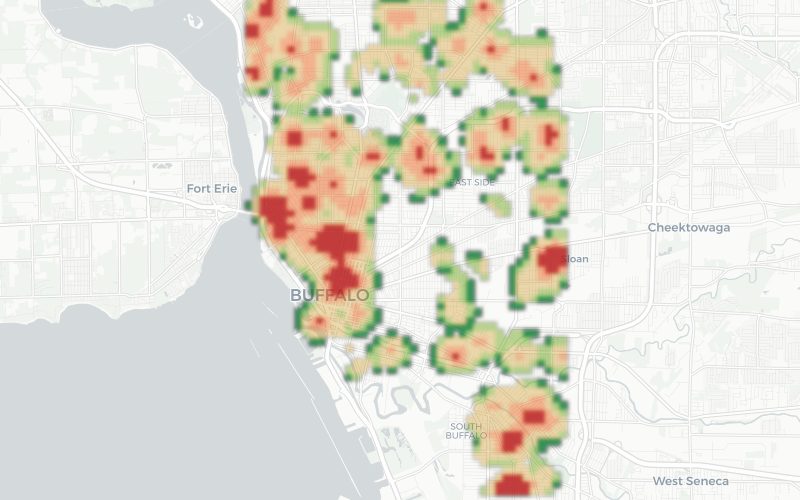
Buffalo
NY662 geocoded noise complaints · 1.5K grid cells
A 152 · B 304 · C 606 · D 304 · F 152
Open Buffalo noise map →
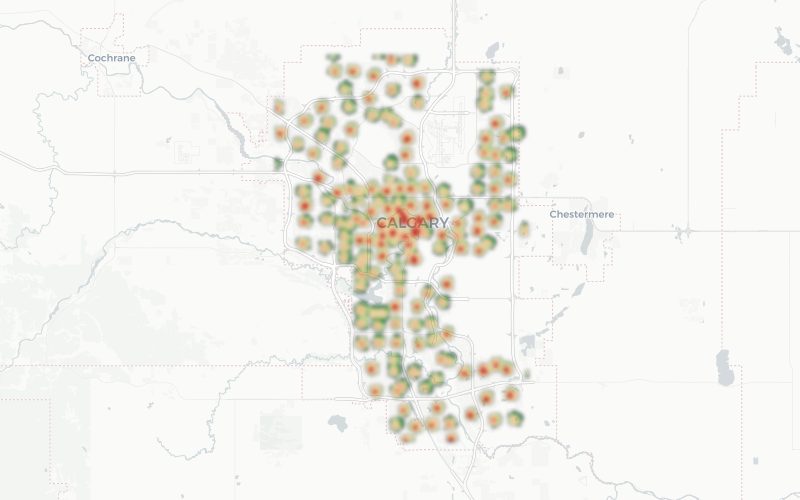
Calgary
AB, CA2.3K geocoded noise complaints · 4.5K grid cells
A 453 · B 904 · C 1.8K · D 904 · F 453
Open Calgary noise map →
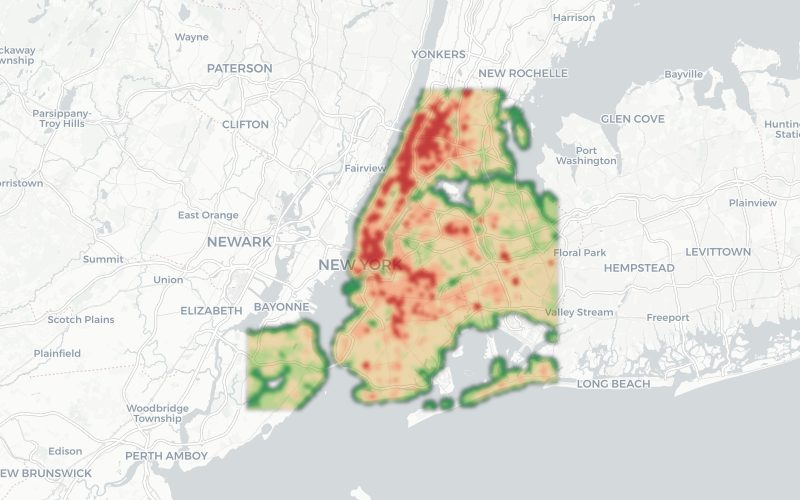
New York City
NY777.2K geocoded noise complaints · 17.7K grid cells
A 1.8K · B 3.5K · C 7.1K · D 3.5K · F 1.8K
Open New York City noise map →
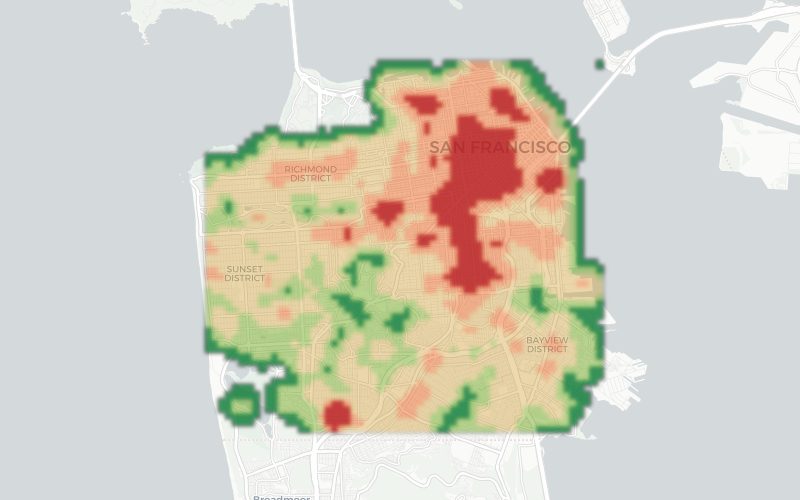
San Francisco
CA14.2K geocoded noise complaints · 2.8K grid cells
A 283 · B 564 · C 1.1K · D 564 · F 283
Open San Francisco noise map →
Cities without a noise map
A city becomes eligible for a noise map when its 311 feed publishes at least 500 geocoded noise-category complaints in the trailing year. Cities below that floor are listed here. Chicago is a special case: its 311 system publishes a large volume of noise complaints, but 100% are aircraft-noise filings with no reported coordinates, so there’s nothing to pin on a map. We may add a ZIP-level choropleth fallback for cases like this in a future update.
All noise scores are per-city percentiles. An A in one city and an A in another both mean “quietest 10% of complaint-covered locations in that city” — not “equally quiet in absolute terms.” The raw complaints per week within a blockcount on each map is the direct, unweighted number you can verify against the city’s open data feed. Full methodology →